When Should You Get Your Insurance Involved for Roof Damage?
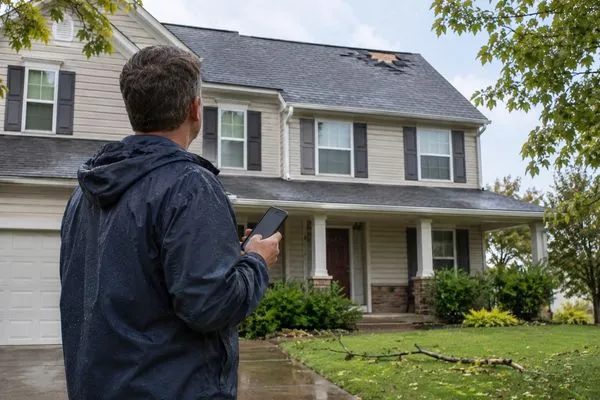
The storm has passed, and from the driveway you can see a few shingles missing. Your phone is in your hand, but you’re not sure whether calling your insurer will help or hurt. A roof insurance claim can pay for a major repair, yet filing for the wrong damage can cost you more.
Insurers look closely at what caused the damage, how much it costs, and when you reported it. In storm-prone Virginia, sorting out those three answers early puts you in a stronger position. So when does a call to your insurer actually make sense for your roof?
A Roof Insurance Claim Makes Sense for Sudden, Costly Damage
Filing usually pays off when wind, hail, or a falling tree causes damage that clearly exceeds your deductible. Worn-out shingles and slow leaks rarely qualify, while small repairs often fall below the deductible anyway. How an insurer sorts covered damage from the rest shapes nearly every decision that follows.
Sudden Damage Versus Slow Wear in Your Insurer’s Eyes
Most homeowners policies cover damage that happens suddenly and by accident, like shingles torn loose in a windstorm. Hail strikes and fallen limbs fit the same rule, because each one causes harm in a single moment.

Gradual wear, like brittle shingles or a leak that has dripped for months, counts as maintenance rather than damage. When a storm hits an already aging roof, the adjuster decides how much damage came from weather versus time.
Run the Deductible Math Before You Pick Up the Phone
Your deductible is the amount you pay before the insurer pays anything on a covered loss. Some policies use a separate wind or hail deductible set as a percentage of your home’s insured value. On a home insured for $300,000, a 2% deductible means the first $6,000 of storm repairs comes from you.
Coverage type changes the check too, since actual cash value (ACV) policies subtract depreciation for your roof’s age. For an older roof, the gap can be large, while replacement cost value (RCV) coverage pays nearly in full. Every roof insurance claim enters a database insurers check when setting rates, so covering minor fixes yourself may save money.
Let a Roofer Price the Damage Ahead of a Roof Insurance Claim
A roofer’s written estimate puts a price on the repair, giving you the one number every other step depends on. Set that figure beside the math from your policy, and the choice to file often becomes obvious. Once you have that number, you only contact your insurer when a claim looks worthwhile.
If you want the roof’s condition documented in detail, ask about a formal inspection report as a separate service. A report like this includes photos, which gives your insurer more to review alongside your estimate.
The Paper Trail That Strengthens Your Case
Adjusters work from evidence, so a well-organized file can speed up the process and reduce back-and-forth. Start gathering it the day the damage happens, while dates and details are still fresh. A complete claim file usually includes the five items below, stored in one folder.
The storm’s date, plus a weather report or local news story confirming wind or hail in your area.
Time-stamped photos and video of roof damage taken from the ground, along with any interior stains or leaks.
Receipts for emergency measures, such as tarps or water cleanup, which many policies reimburse when reasonable.
The declarations page of your policy, showing your deductible, coverage limits, and whether roof losses pay ACV or RCV.
A contractor’s written quote that itemizes the damaged materials and what the repair will cost.
Keep copies of everything, and write down the date, name, and summary of every conversation with your insurer. A simple call log helps settle any later disagreement over who said what and when.
Missteps That Can Sink a Roof Insurance Claim
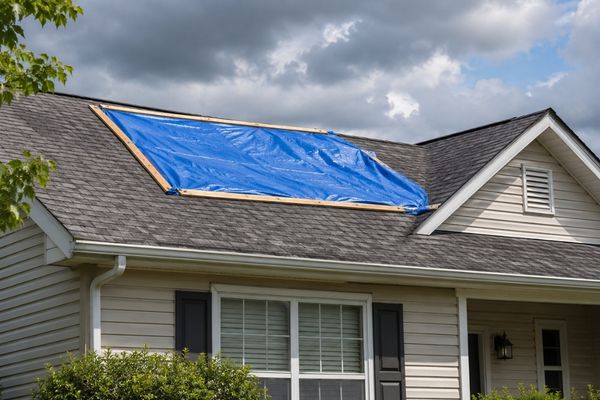
Waiting weeks to report storm damage gives your insurer room to question whether the storm caused it. Policies also expect you to prevent further harm, so a tarp over an open spot protects your coverage. Damage you could have limited may go unpaid, which can shrink the final settlement fast.
Be wary of anyone who knocks after a storm and pushes for a signature on the spot. Offers to cover your deductible are another red flag, and a Virginia law taking effect January 1, 2027, bans them. Never sign an assignment of benefits, which hands your claim payments to a contractor, without asking your agent first.
Make Your Roof Insurance Claim Decision With Facts in Hand
A few facts gathered up front can turn a nerve-racking call into a confident one. ModernEdge offers free estimates that break the damage down by area and cost, giving you a clear starting point. Our GAF Certified™ status also means quality materials and proven installation practices on every repair we take on.
Whether you file or pay directly, you’ll hear from us at every step until the work is complete. If the numbers favor filing, our estimate slots right into the paper trail you’ve already started. Get in touch with us at (540) 660-2920 and know your repair cost before your insurer does.
